
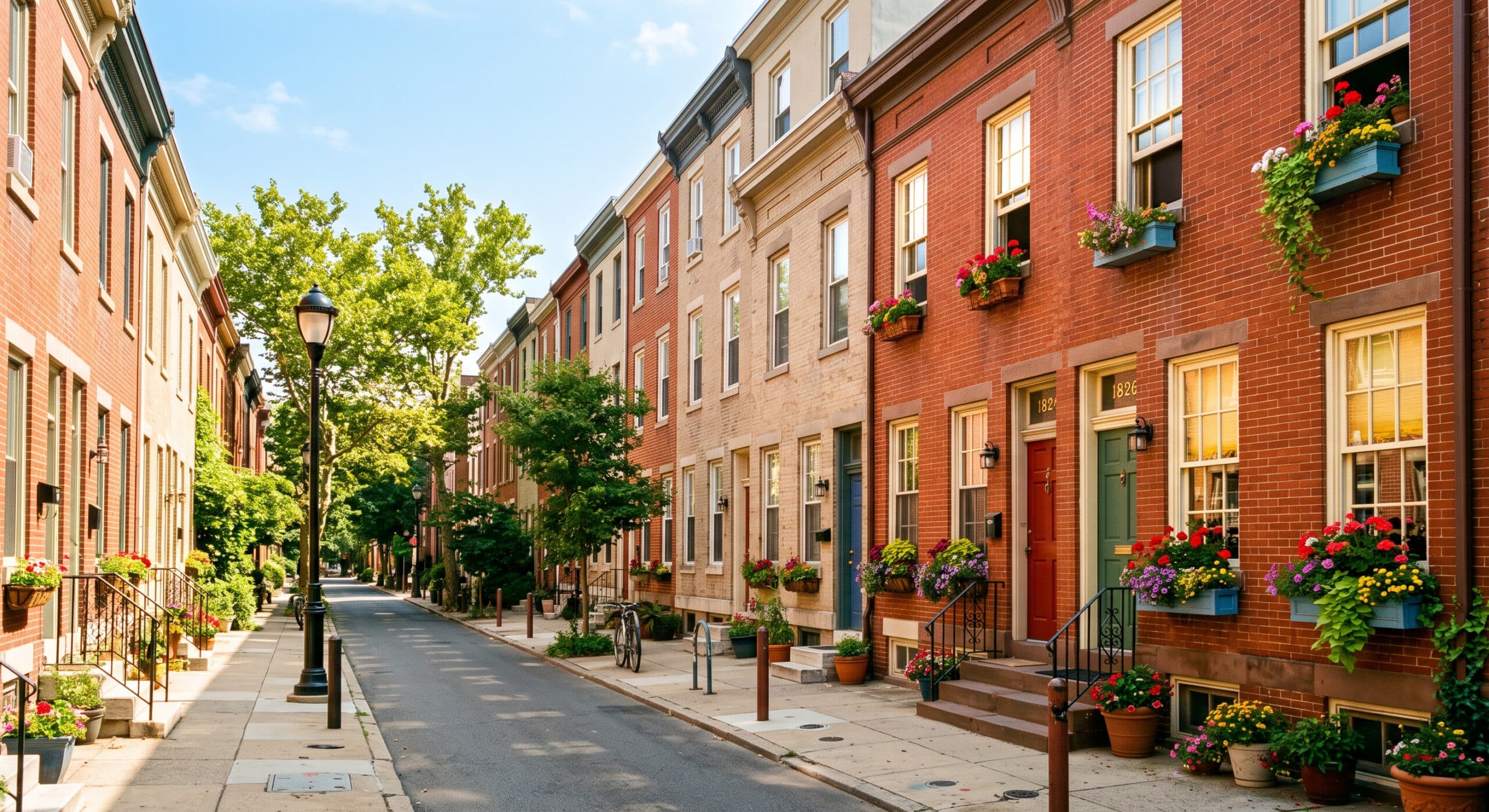
Philadelphia summers are demanding. Temperatures regularly climb into the 90s, and dense urban housing (row-homes sharing walls, apartments stacked on top of one another) traps heat far more stubbornly than detached single-family homes. When you rent, installing central AC or replacing windows isn’t an option, which means staying comfortable requires a practical, lease-friendly approach.
We’ve put together a straightforward guide to help apartment and row-home renters beat the heat this summer — no permanent modifications required.
1. Block Sunlight Before It Heats Your Space
Sunlight streaming through windows is one of the fastest ways to raise indoor temperatures, and blocking it early in the day makes a measurable difference. Blackout curtains or thermal drapes are among the most effective tools available to renters — they require nothing more than a curtain rod and can significantly reduce solar heat gain. Keep them closed on south- and west-facing windows during peak afternoon hours, roughly 1–5 PM, and reopen them after sunset to let cooler air circulate.
Removable reflective window film is another strong option. Most versions apply without damaging glass, making them renter-safe, and they block a substantial portion of radiant heat without darkening a room completely.
2. Improve Airflow Throughout Your Unit
Apartments and row-homes often lack the natural cross-ventilation that detached homes benefit from, but you can create a meaningful cooling effect with some intentional fan placement. Position a box fan facing outward in one window to push hot air out, and open windows on the opposite side of your unit to draw cooler air in. This technique works best in the early morning and after dark, when outdoor temperatures have dropped.
If your unit has a ceiling fan, set it to run counterclockwise in summer. This pushes cool air downward rather than recirculating warm air near the ceiling — a small adjustment that improves comfort noticeably.
In row-homes, opening windows on multiple floors creates a chimney effect: hot air rises and exits through upper-level windows while cooler air enters from below. Taking advantage of your home’s vertical layout costs nothing and works consistently on warm evenings.
3. Reduce Heat Generated by Everyday Appliances
Appliances contribute more indoor heat than most renters realize. Ovens and stovetops raise kitchen temperatures quickly, so shifting to no-cook meals, slow cookers, or outdoor grilling during heat waves is a practical workaround. Dishwashers and dryers also generate substantial warmth; scheduling them to run after 9 PM, when outdoor temperatures are lower, reduces their impact on your living space.
Swapping incandescent bulbs for LED bulbs is a straightforward change that produces noticeably less heat and costs nothing to reverse when you move out.
4. Choose the Right Cooling Equipment for Your Rental
For renters without central air, both portable AC units and window AC units are worth considering — each with important distinctions. Window units are more energy-efficient but require a compatible window opening and, in some buildings, landlord approval before installation. Always review your lease before purchasing one.
Portable AC units vent through a hose that fits most standard windows and generally require no permanent modifications, making them the more flexible choice for renters. They are less efficient than window units, but in a well-sealed room, they can reduce temperatures meaningfully. If you are uncertain what equipment your lease permits, contacting your property manager before purchasing is always the right first step.